
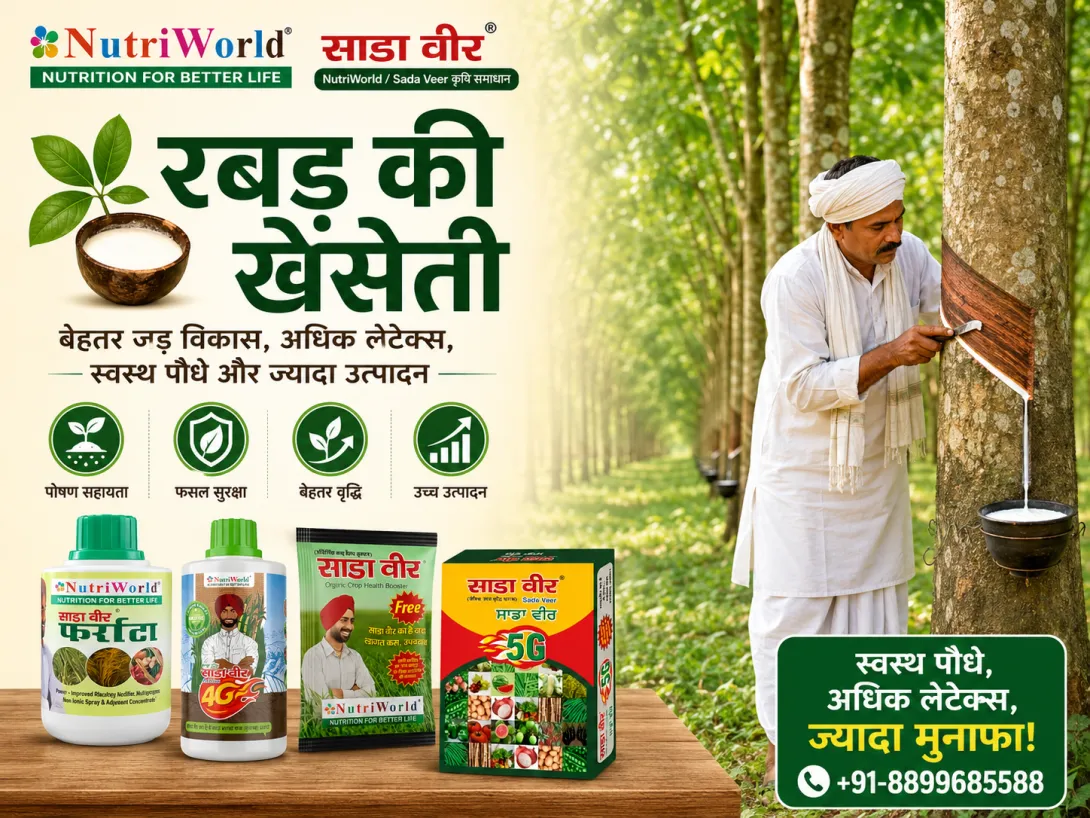
Rubber Cultivation: Complete Guide for Better Growth, Nutrition Management and Higher Production
Rubber is an important industrial crop mainly cultivated for natural latex. This latex is used in making tyres, tubes, gloves, footwear, rubber sheets, industrial goods and many other products. Rubber is a long-duration plantation crop that can provide income for many years. With suitable climate, good soil, improved planting material, balanced nutrition and proper care, farmers can earn good long-term returns from rubber cultivation.
Suitable Climate
Rubber grows well in warm and humid climatic conditions. A temperature range of 25°C to 35°C is considered suitable for good growth. Annual rainfall of around 2000 mm or more is ideal for rubber. A long dry period can affect plant growth and latex production.
Soil Requirement
Deep, fertile, well-drained loamy soil is best for rubber cultivation. Waterlogging is harmful because excess moisture can cause root rot. Soil pH between 4.5 and 6.5 is considered suitable for rubber growth.
Field Preparation
Rubber is a long-term crop, so field preparation should be done carefully before planting. The field should be cleared of bushes, weeds and unwanted trees. The land should be prepared according to slope and drainage requirements. In sloping areas, contour bunds or terraces should be made to prevent soil erosion.
Planting Time
Rubber plants are generally planted during the rainy season. June to September is considered a suitable time for planting because soil moisture is available and plants establish quickly.
Planting Method
Budded plants or grafted plants are commonly used for rubber planting. Pits of about 45 cm × 45 cm × 45 cm are prepared for planting. Well-decomposed farmyard manure or compost should be mixed in the pits before planting.
The spacing is generally kept around 3 meters × 6 meters, depending on variety and local conditions. Proper spacing allows enough sunlight, air movement and nutrient availability for healthy plant growth.
Fertilizer and Nutrition Management
Balanced nutrition is very important, especially during the early years of rubber plantation. Nitrogen supports vegetative growth, phosphorus helps in root development, and potash improves plant strength and disease resistance. Farmyard manure, vermicompost and green manure help maintain soil fertility.
Deficiency of micronutrients such as zinc, boron, iron, manganese and copper may cause yellowing of leaves, slow growth and weak plants. In such conditions, Sada Veer Multi Micro Nutrient can help provide essential micronutrients and support better plant health.
Irrigation Management
Rubber is mostly a rainfed crop, but irrigation is important for young plants during long dry periods. During the first 2 to 3 years after planting, proper moisture should be maintained for healthy growth. Waterlogging should be avoided, so good drainage is necessary.
Weed Management
Weed control is very important in young rubber plantations. Weeds compete with rubber plants for nutrients, water and space. Timely weeding and mulching help conserve soil moisture and improve plant growth.
Mulching
Mulching around rubber plants with dry grass, leaves or organic waste is beneficial. It helps retain soil moisture, reduces weed growth and maintains soil temperature.
Intercropping
Rubber plants take several years to reach full growth. During the initial years, farmers can grow intercrops such as banana, ginger, turmeric, pineapple, pulses or other short-duration crops between rubber rows. Intercropping provides additional income during the early years of plantation.
Major Diseases in Rubber
1. Leaf Fall Disease
In this disease, leaves dry and fall from the plant. It may spread more in humid conditions and can affect plant growth if not managed on time.
2. Root Rot
Root rot occurs when water remains around the roots for a long time. The plant becomes weak and its growth is reduced. Proper drainage is necessary to prevent this disease.
3. Dieback
In dieback, branches start drying from the top. If not controlled on time, it can seriously damage the plant.
Disease Management
To reduce fungal diseases, proper drainage, clean plantation conditions and timely care are important. Sada Veer Fungus Fighter may help improve plant immunity and support the plant against fungal problems.
Pest Management
Rubber plants may be affected by scale insects, mealybugs, mites and leaf-eating pests. These pests weaken the plant and damage the leaves. Regular field monitoring, plantation cleanliness and timely pest control measures should be followed.
Special Care for Better Growth
Good early growth of rubber plants is very important for better future production. Plants need timely nutrition, moisture and disease control. 4G Sadaveer, a seaweed and organic acid-based product, may help support plant growth, root development and leaf quality.
For better spreading and absorption of sprays, Farrata can be used as a spray adjuvant along with suitable agricultural inputs as per guidance.
What is Tapping?
The process of collecting latex from rubber trees is called tapping. Generally, rubber trees become ready for tapping after 6 to 7 years, depending on variety, plant growth and management. Tapping should be done at the correct height and angle. Improper tapping can damage the tree and reduce latex production.
Latex Collection
After tapping, a white milky latex comes out from the tree. It is collected in cups. Later, the latex is processed into rubber sheets or other rubber products. Cleanliness is very important for producing good-quality latex.
Yield
Rubber production depends on variety, climate, soil, nutrition, tapping method and overall management. Under good care, a rubber plantation can provide income for many years. Proper nutrition and scientific management help improve both latex production and quality.
Important Tips for Farmers
- Use good-quality budded or grafted plants for planting.
- Avoid waterlogging in the field.
- Control weeds during the early years.
- Apply fertilizers and micronutrients on time.
- Monitor the plantation regularly for diseases and pests.
- Tapping should be done only by trained persons.
- Maintain cleanliness in the plantation.
Conclusion
Rubber cultivation is a long-term industrial farming system that can provide income for many years. Proper early care, balanced nutrition, good drainage, pest-disease management and scientific tapping are very important for success in this crop. If farmers plant properly, provide balanced nutrition and monitor the plants regularly, they can earn good income from rubber cultivation for a long time.
The proper use of Sadaveer and NutriWorld growth and nutrition-supporting products at suitable stages can help make rubber plants healthier, stronger and more productive. With scientific cultivation practices, timely nutrition and proper plantation care, rubber farming can become more profitable for farmers.