
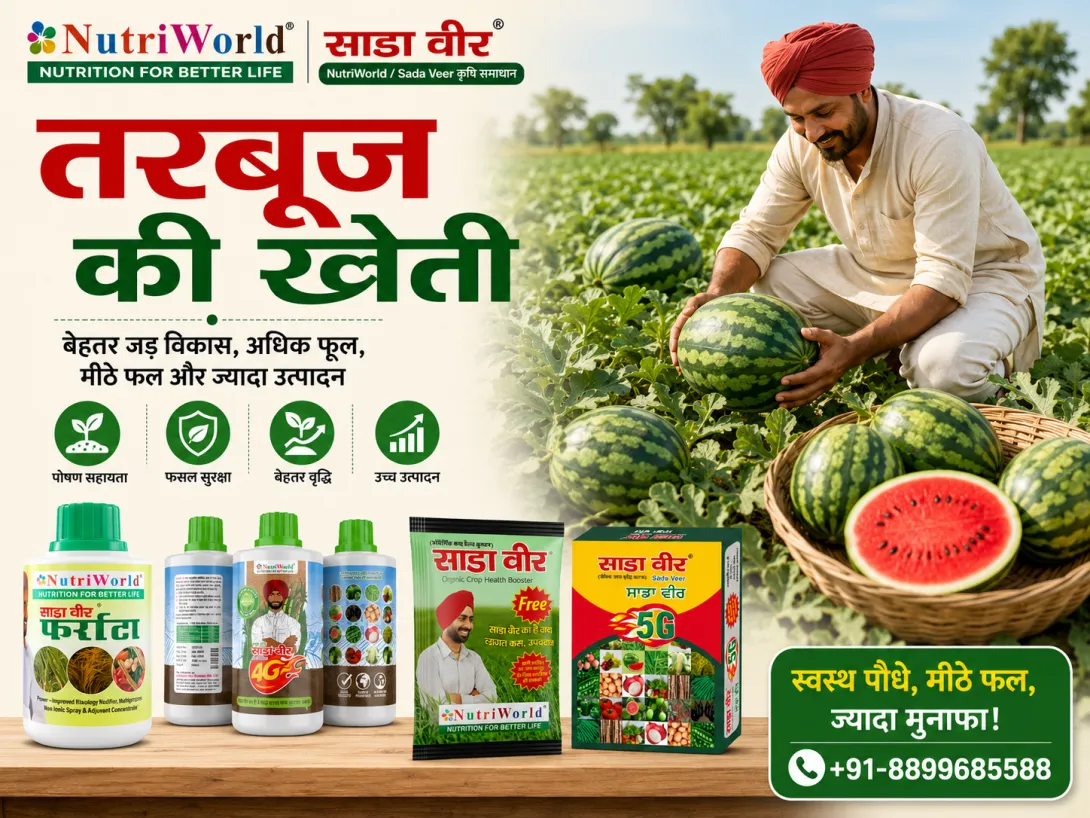
Watermelon Cultivation: Complete Guide for Better Growth, Nutrition Management and Higher Yield
Watermelon is an important and profitable summer fruit crop. It is known for its sweet taste, juicy pulp and cooling effect. During the summer season, the demand for watermelon remains very high in the market, so this crop can provide good income to farmers. With proper soil selection, improved varieties, timely sowing, balanced nutrition, proper irrigation and effective disease-pest management, farmers can get excellent production from watermelon cultivation.
Suitable Climate
Watermelon is a warm and dry season crop. A temperature range of 25°C to 35°C is suitable for good growth. Excessive cold, frost and continuous rainfall are harmful for the crop. Warm and dry weather during fruit maturity helps improve sweetness, fruit size and overall quality.
Soil Requirement
Sandy loam or well-drained loamy soil is best for watermelon cultivation. Waterlogging should be avoided because excess moisture can cause root rot and fungal diseases. Soil pH between 6.0 and 7.5 is considered suitable for good crop growth.
Field Preparation
The field should be ploughed 2 to 3 times to make the soil loose and fine. Well-decomposed farmyard manure or vermicompost should be mixed during the last ploughing. Proper drainage should be maintained in the field so that water does not accumulate near the roots.
Sowing Time
Watermelon is generally sown from January to March. In some areas, especially near riverbeds or sandy soils, sowing can also be done from December. Timely sowing helps farmers get better market prices during the summer season.
Seed Rate and Seed Treatment
About 600 grams to 1 kg of seed is sufficient for one acre. Before sowing, seeds should be treated with a suitable biological or recommended seed treatment product. This helps improve germination and reduces early-stage disease problems.
Sowing Method
Watermelon can be sown in pits, beds or channels. The distance between plants should be around 60 to 90 cm, and the distance between rows should be around 1.5 to 2 meters. Two to three seeds can be sown in each pit. After germination, healthy seedlings should be kept and weak seedlings should be removed.
Fertilizer and Nutrition Management
Balanced nutrition is very important in watermelon cultivation. Nitrogen supports early vegetative growth, phosphorus helps in root and flower development, and potash improves fruit sweetness, size and quality. Farmyard manure or vermicompost helps improve soil fertility and moisture retention.
Deficiency of micronutrients such as zinc, boron, iron and manganese may cause yellowing of leaves, poor flowering, small fruits and reduced fruit quality. In such conditions, Sada Veer Multi Micro Nutrient can help provide essential micronutrients to the crop and support better plant health.
Irrigation Management
Watermelon requires regular but controlled irrigation. Light irrigation should be given after sowing. Moisture should be maintained during vine growth, flowering and fruit development stages. However, excess irrigation during fruit maturity may reduce sweetness and may also cause fruit cracking.
Drip irrigation is very useful for watermelon cultivation because it saves water and helps deliver nutrients directly to the root zone.
Weed Management
The field should be kept weed-free during the first 30 to 40 days after sowing. Weeds compete with the crop for water, nutrients and space. Timely weeding and light hoeing help improve plant growth. Deep hoeing should be avoided after the vines spread.
Flowering and Fruit Development
Watermelon produces both male and female flowers. Bees and other beneficial insects play an important role in pollination. Excessive use of chemicals during flowering should be avoided because it may affect pollination.
After fruit setting, the crop requires proper nutrition and moisture. At this stage, 4G Sadaveer, a seaweed and organic acid-based product, may support vine growth, flowering, fruit development and fruit quality when used as per proper guidance.
Major Diseases in Watermelon
1. Powdery Mildew
White powder-like growth appears on the leaves. The leaves become weak, photosynthesis is reduced and fruit development is affected.
2. Downy Mildew
Yellow patches appear on leaves, and the disease spreads quickly in humid conditions. It reduces vine growth and fruit quality.
3. Root Rot
Root rot occurs when soil remains wet for a long time. Plants may suddenly wilt and dry. Good drainage and controlled irrigation are necessary to prevent this problem.
4. Fruit Rot
Fruit rot occurs due to excess moisture, waterlogging or direct contact of fruits with wet soil. Fruits should be protected from direct soil contact by using dry grass, leaves or mulching.
Disease Management
To reduce fungal diseases, farmers should use healthy seeds, maintain proper spacing, avoid waterlogging and keep the field clean. Sada Veer Fungus Fighter may help improve crop immunity and support the crop against fungal problems.
Major Pests
Aphids, whiteflies, thrips, red mites and fruit flies are common pests in watermelon. Sucking pests weaken the plant by sucking sap from leaves, while fruit flies directly damage the fruits.
For pest management, regular field monitoring, yellow sticky traps, pheromone traps and biological methods should be used. If pest attack is severe, farmers should use recommended pesticides after consulting an agricultural expert.
Spray Management
Spraying should be done in the morning or evening. Spraying during strong sunlight may damage the leaves. To improve spreading and absorption of nutrients or pesticides, Farrata can be used as a spray adjuvant. It may help improve spray coverage and effectiveness.
Fruit Maturity and Harvesting
Watermelon is usually ready for harvesting 80 to 100 days after sowing, depending on the variety and climate. When the fruit matures, the skin color changes, the part touching the ground turns yellow and the fruit gives a heavy sound when tapped.
For distant markets, fruits should be harvested slightly before full maturity. For local markets, fully mature fruits can be harvested. Fruits should be handled carefully during harvesting to avoid injury and spoilage.
Yield
With good cultivation practices, improved varieties, proper nutrition and effective pest-disease management, watermelon yield may range from 100 to 200 quintals per acre or more. Fruits with good size, sweetness, color and quality usually get better market prices.
Important Tips for Farmers
- Use treated seeds before sowing.
- Select well-drained soil for cultivation.
- Avoid excess irrigation and waterlogging.
- Maintain proper nutrition during flowering and fruit development.
- Use dry grass, leaves or mulch to prevent direct contact of fruits with soil.
- Monitor the field regularly for pest and disease attack.
- Harvest fruits at the right stage and handle them carefully.
Conclusion
Watermelon cultivation is a short-duration and profitable fruit crop. Climate, water management, nutrition and pest-disease control are very important for this crop. If farmers sow at the right time, use balanced fertilizers, provide controlled irrigation and monitor the crop regularly, they can get good yield and better income.
The proper use of Sadaveer and NutriWorld growth and nutrition-supporting products at the right crop stages can help make watermelon plants healthier, stronger and more productive. With scientific cultivation practices and timely care, watermelon farming can become more profitable for farmers.